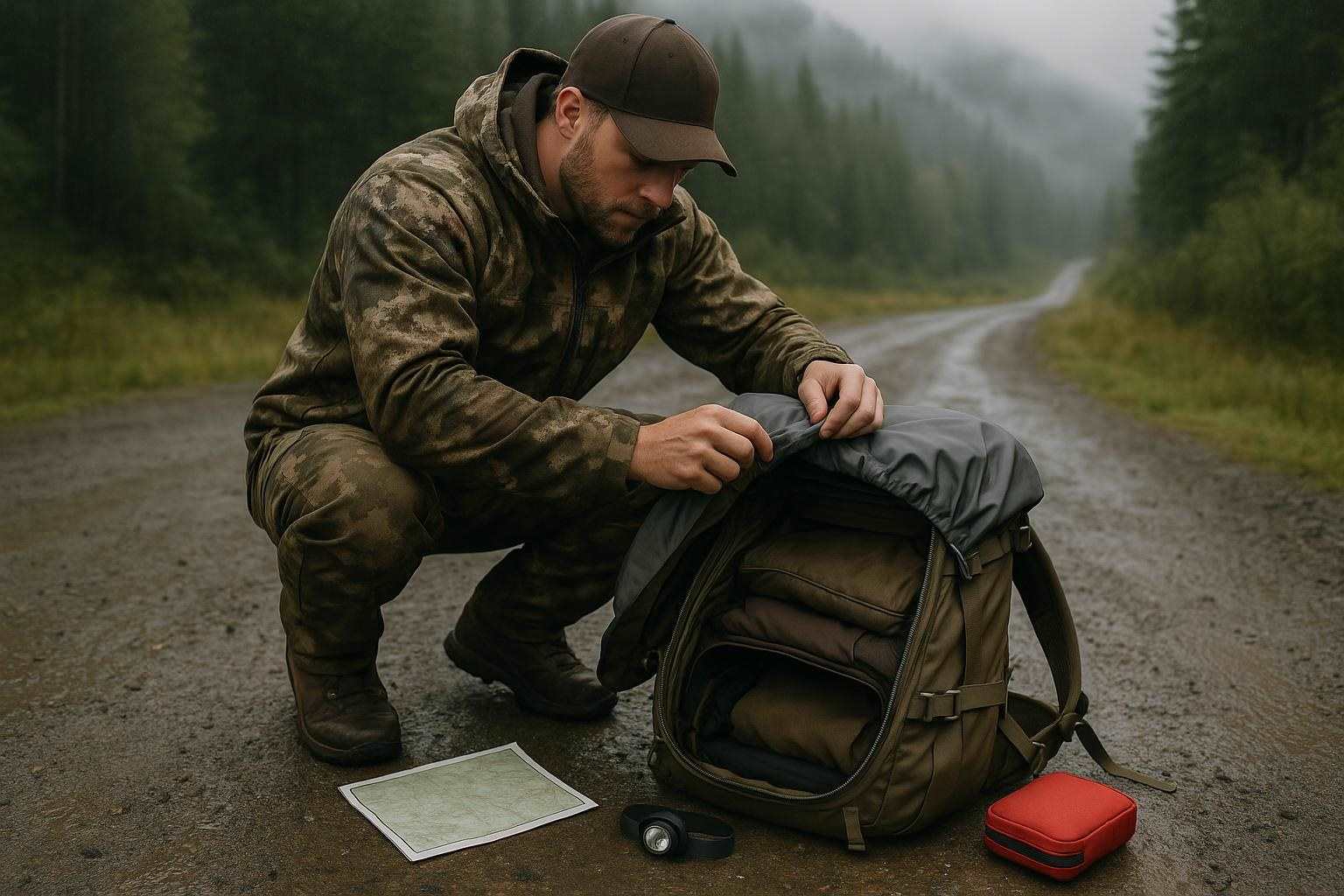
A boot lace snaps on the walk in, rain reaches the map pocket, and the spare light is still on the garage shelf. None is dramatic alone, but together they can create a navigation, communication or decision-making problem. A useful gear audit reduces that risk without encouraging a heavier pack or a buying spree. Carry what protects your judgment, supports a legal and ethical hunt, and matches the terrain and forecast.
Start with the hunt, not the shopping list
Before checking equipment, define the outing. How far will you travel from the vehicle? Will you return before dark? Will you cross wet ground, steep slopes or thick cover? Will you be alone, and can someone at home describe your route and expected return time?
These answers set priorities better than a generic checklist. A short, familiar morning trip may require less clothing and food than a remote day in changing weather, but it still needs dependable communication, navigation and a way to manage an injury or delay. An older item suited to the terrain may be better than a new, lighter product you have never operated in gloves.
Separate essentials from conveniences. Essentials keep you safe, legal, functional or able to make a responsible decision. Convenience items improve comfort or save time and can be left behind when conditions allow. This distinction prevents lightweight gear from becoming an excuse to remove something needed when plans change.
Audit the items that protect judgment
Field safety depends on small systems working together. Check footwear for worn tread, loose soles and wet-weather weaknesses. Inspect clothing for damaged closures, choose adjustable layers, and pack rain protection even when the forecast looks favorable; forecasts guide planning but are not guarantees.
Check navigation deliberately. A phone can be valuable, but battery life, signal coverage, cold and moisture can limit it. Carry a map or other dependable backup suited to the area, and learn to use it before departure. A headlamp is usually more practical than a handheld light when both hands may be occupied. Test its controls and carry a spare power solution suited to the model.
Communication depends on distance and coverage. Tell a reliable person where you are going, when you expect to return and what to do if you miss that time. A check-in message is not a substitute for local emergency guidance or a realistic self-rescue plan. A compact first-aid kit is useful only if it contains supplies you understand and can reach quickly.
Make weight earn its place
A lighter load is not automatically safer. Ask what each item does when the hunt stops going to plan. A small repair kit may earn its place by addressing a broken buckle, torn strap or loose boot lace. Extra optics accessories may not, especially when they add bulk without improving identification, navigation or observation.
Choose between similar products by asking: Can I operate it in poor weather? Can I repair or replace its critical part? Does it duplicate something already packed? Will losing it create a safety or legal problem? These questions often favor simple, familiar equipment over specialized additions.
Walk with the final load before the trip. Notice pressure points, noisy straps, shifting contents and pockets that require unnecessary digging. Keep high-priority items accessible, and protect documents, electronics and ignition sources from moisture. Organize the pack by use so a tired decision is less likely to become a bad one.
Common mistakes include buying for an imagined expedition, carrying multiple versions of one comfort item and leaving food or water decisions until the last minute. Reassign weight saved from redundant gear to hydration, insulation or emergency capability.
Confirm the legal and ethical details
Preparation is also a compliance check. Regulations may govern seasons, licenses, tags, legal methods, firearm or archery requirements, transport, reporting and species-specific restrictions. They can change and vary by jurisdiction or management area, so verify current official guidance before each trip instead of relying on memory, an old screenshot or another hunter's advice.
Carry required documentation in a form that remains readable when wet. Confirm boundaries and access permissions as well. A route that looks open on a map may include private land, seasonal closures or habitat protection areas.
Ethical hunting begins before the shot. Know how to identify the intended legal target and what lies beyond it. Set a personal limit for weather, visibility, distance and shot opportunity, and stop when conditions no longer support a responsible decision. If an animal is wounded, follow local requirements and your recovery plan rather than rushing or abandoning judgment because tracking is difficult.
Habitat stewardship belongs in the same audit. Avoid unnecessary disturbance, pack out waste and use established access where appropriate. Manage food, scent-producing materials and equipment to avoid creating problems for wildlife or other visitors. The goal is to leave the place ready for responsible future use, not merely to return with gear intact.
Run one final departure check
The night before departure, lay out the actual kit and remove anything you cannot explain. Verify the details most likely to be overlooked: charged devices, working lights, water, food, weather layers, navigation backup, first aid, required documents, tags, licenses, permitted equipment and a clear contact plan.
A useful final checklist is short:
– Route, access and return time shared with a contact
– Current regulations, permissions and required documents confirmed
– Footwear, clothing and weather protection checked
– Navigation, communication and lighting tested
– Water, food, first aid and repair items packed
– Equipment matched to the terrain, forecast and legal method
– Critical items organized so they are reachable
Do not let the checklist replace judgment. If the forecast, access conditions, physical condition or equipment reliability has changed, postpone, shorten or redesign the outing. Good hunting preparation is measured not by how much equipment reaches the trailhead, but by whether the person carrying it can remain safe, lawful, adaptable and respectful when the field refuses to follow the plan.